A sharp turn can place a CV joint at one of the widest operating angles it sees during normal driving. Add engine torque at the same moment, and an already worn joint can be placed under considerably more stress than it experiences while traveling straight ahead.
That is why CV axle problems sometimes become obvious in parking lots, during tight turns, or while making a U-turn. Clicking, popping, vibration, or a sudden mechanical noise may be the first sign the driver notices, even though wear inside the joint has been developing for much longer.
Why a CV Axle Can Break During a U-Turn
The outer CV joint works at its greatest angle when the steering wheel is turned sharply. During a U-turn, that joint may also be transferring substantial torque if the driver accelerates while the wheels are near full lock.
A healthy axle is designed to handle those conditions. Trouble develops when the joint is already badly worn, contaminated, damaged, or operating with little grease. The sharp steering angle does not usually destroy a good axle by itself. Instead, it can be the moment when a severely worn joint finally gives way.
What You May Hear When the Axle Fails
A complete CV axle failure can make a loud pop, bang, or grinding sound. If the joint separates internally, the axle shaft may begin spinning without properly driving the wheel.
Before reaching that point, an outer CV joint often gives warning through repeated clicking or popping during tight turns. The noise may become louder when accelerating through a parking lot turn or making a U-turn. An inner CV joint can produce different symptoms, including clunking or vibration under acceleration.
Can the Vehicle Stop Moving Completely?
Yes. On many front-wheel-drive vehicles, an open differential sends torque toward the side with the least resistance. If one CV axle breaks or disconnects, the transmission may send power toward the failed side instead of driving the intact wheel.
The engine can still run, and the transmission may still shift into gear, but the vehicle may not move. Drivers sometimes assume the transmission has failed because pressing the accelerator produces engine speed without forward motion. An inspection underneath the vehicle can reveal whether an axle or CV joint has separated.
A Broken Axle Can Damage Other Components
Once an axle breaks, the loose shaft or joint may move around underneath the vehicle. Depending on where the failure occurs, it can strike suspension parts, the transmission housing, wiring, brake hoses, or other nearby components.
Fluid leakage is another possibility. If the inner axle pulls out of the transmission or differential, transmission fluid or gear oil may escape from the axle seal area. Continuing to run or move the vehicle with a significant fluid loss can create additional drivetrain damage.
What Happens to Steering When a CV Axle Breaks?
A broken CV axle does not normally disconnect the steering linkage itself. The steering wheel may still turn the wheels because tie rods, steering knuckles, and other steering components remain connected.
The vehicle can still become difficult or unsafe to control, however. A loose axle may bind against surrounding parts, and the sudden loss of drive torque can change how the vehicle reacts in the middle of a turn. If the failure happens while accelerating into traffic or crossing an intersection, the loss of propulsion can create an immediate hazard.
Warning Signs Usually Appear Before Complete Failure
CV joints often provide clues before they reach the point of breaking. Paying attention to those changes can allow the axle to be replaced while the vehicle can still be driven into the shop.
Common warning signs include:
- Clicking or popping during sharp turns
- Clunking when shifting between acceleration and deceleration
- Vibration while accelerating
- Grease thrown around the inside of a wheel
- A visibly torn CV boot
- Excessive looseness in a CV joint
A torn boot is especially important because it allows grease to escape while letting dirt and water enter the joint. Once abrasive contamination gets inside, joint wear can accelerate quickly.
A Torn Boot Does Not Always Mean the Axle Is Ruined
If a damaged CV boot is found early, the joint may still be in good condition. In some cases, the original axle can be cleaned, inspected, repacked with the correct grease, and fitted with a new boot.
Once the joint is clicking, heavily contaminated, loose, or damaged internally, replacing only the boot is usually no longer enough. The worn surfaces inside the joint remain worn even after fresh grease is added. At that stage, complete axle replacement is generally the better repair.
Should You Keep Driving After a CV Axle Breaks?
No. If the axle has completely failed, the vehicle should be stopped in a safe location and transported for repair. Even if the vehicle can still creep or move in some situations, a broken or partially separated axle can shift position and cause additional damage.
If you only have early warning signs such as clicking, the urgency depends on the severity of the condition, but delaying the inspection is risky. CV joint wear does not repair itself, and the difference between a noisy axle and a completely separated one may only be additional time and mileage.
How Technicians Check a Suspected CV Axle Failure
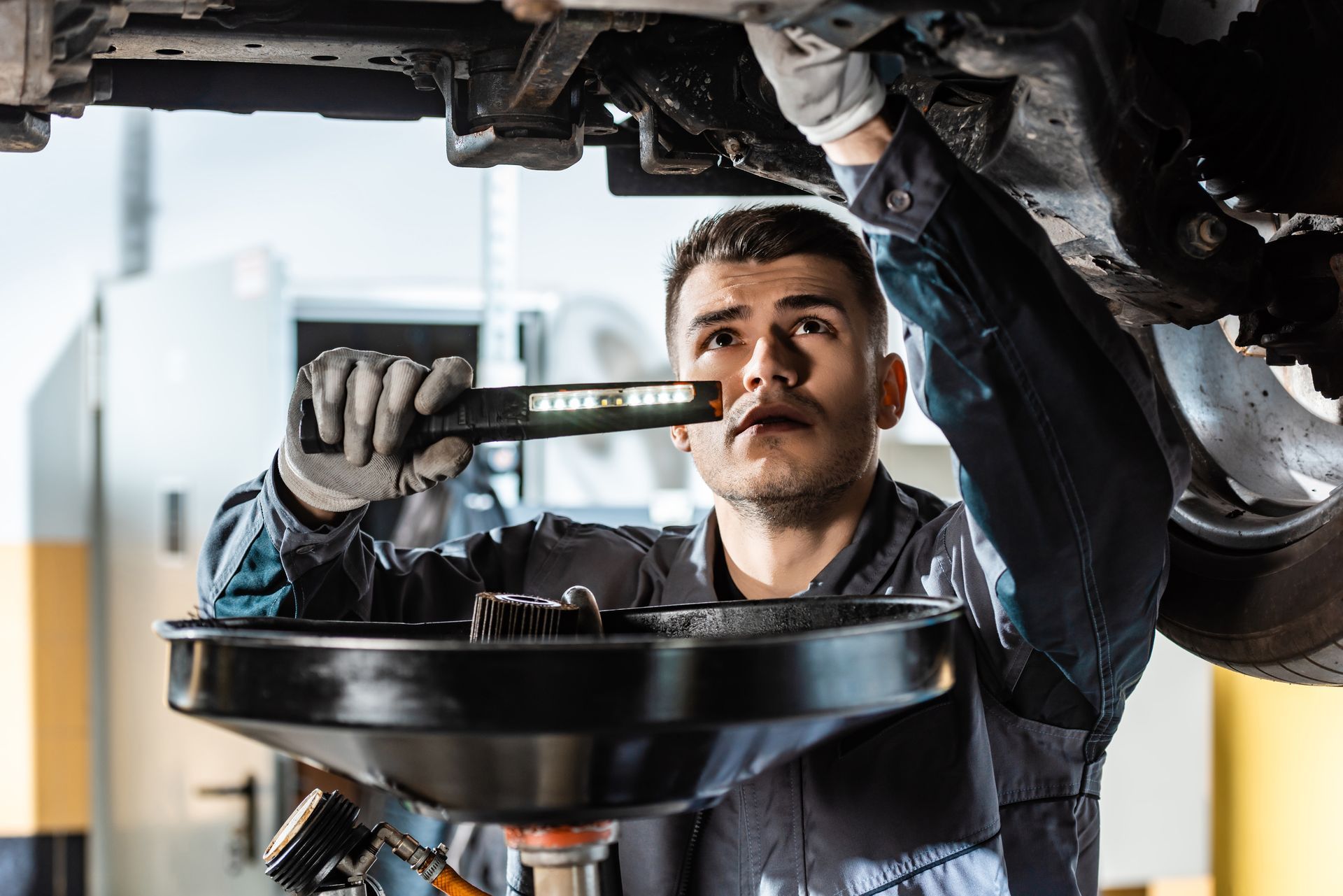
The technician will inspect the CV boots, inner and outer joints, axle shaft, splines, and areas where the axle connects to the transmission and wheel hub. Excessive play, damaged boots, missing grease, or a separated joint can often be identified physically.
A road test may also help when the axle has not broken completely. Clicking on turns, vibration under acceleration, and clunking during load changes can help narrow down whether the inner or outer joint is worn. Other possible sources such as wheel bearings, engine mounts, suspension parts, and drivetrain components should also be considered.
Get CV Axle Repair in Spring Valley, CA, With Asmar's Auto Care
Asmar's Auto Care in Spring Valley, CA, can inspect CV axles, boots, inner and outer joints, wheel hubs, and related drivetrain components when clicking, vibration, or clunking begins.
If your vehicle has developed CV axle symptoms or an axle has already failed,
contact us to schedule an inspection and repair.